
GPON (Gigabit Passive Optical Network) is a fiber-optic technology that delivers high-speed internet to multiple users over a single fiber cable. The “Passive” part is the key: it uses unpowered splitters to divide the signal, making it energy-efficient.
1,Core Components
A GPON network follows a “Point-to-Multipoint” (P2MP) architecture, consisting of three main parts:
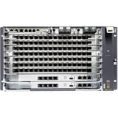
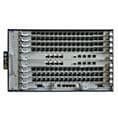
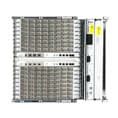
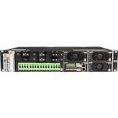
- OLT (Optical Line Terminal): Located at the Service Provider’s central office. It is the “brain” that manages the entire network and converts electrical signals from the internet into light pulses.
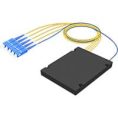
- ODN (Optical Distribution Network): This includes the fiber cables and Passive Splitters. A single splitter can divide one fiber into 32 or 64 individual lines (called a split ratio) without needing any electricity.
- ONT/ONU (Optical Network Terminal/Unit): The device at the customer’s home or business (often called a “fiber modem”). It converts the light signals back into electrical signals for your router or computer.
2. How Data Moves (Upstream vs. Downstream)
GPON uses a single fiber for both sending and receiving data by using different wavelengths (colors) of light, a technique called WDM (Wavelength Division Multiplexing).
Downstream (Provider to User)
- Speed: Up to 2.488 Gbps.
- Wavelength: 1490 nm.
- Method: Broadcast. The OLT sends all data to every ONT connected to the splitter. However, your ONT is “smart”—it only captures the data packets addressed specifically to you (using encryption) and ignores the rest.
Upstream (User to Provider)
- Speed: Up to 1.244 Gbps.
- Wavelength: 1310 nm.
- Method: TDMA (Time Division Multiple Access). Since multiple users are sharing one fiber back to the OLT, they cannot all send data at once, or the signals would collide. The OLT assigns each ONT a specific, microscopic “time slot” to send its data.
Fiberolt.com provides Huawei OLT, ZTE OLT, Nokia OLT, Fiberhome OLT with GPON boards, if you have any requirement, we’d like to assist you at any time.